Bankruptcy Forces Ice Cream Chain to Close 500 Locations
Thrifty Ice Cream, the 85-year-old West Coast institution famous for its cylindrical scoops and budget-friendly prices, faces extinction. Rite Aid's second Chapter 11 bankruptcy filing in May 2025 triggered the shutdown of all 500 Thrifty counters inside the pharmacy chain's stores. The closures mark more than a retail casualty.
For generations of Californians, Thrifty meant childhood memories—waiting for prescriptions while savoring a square-topped scoop that cost less than a dollar. Parents brought children who later brought their own kids. The tradition spanned decades.
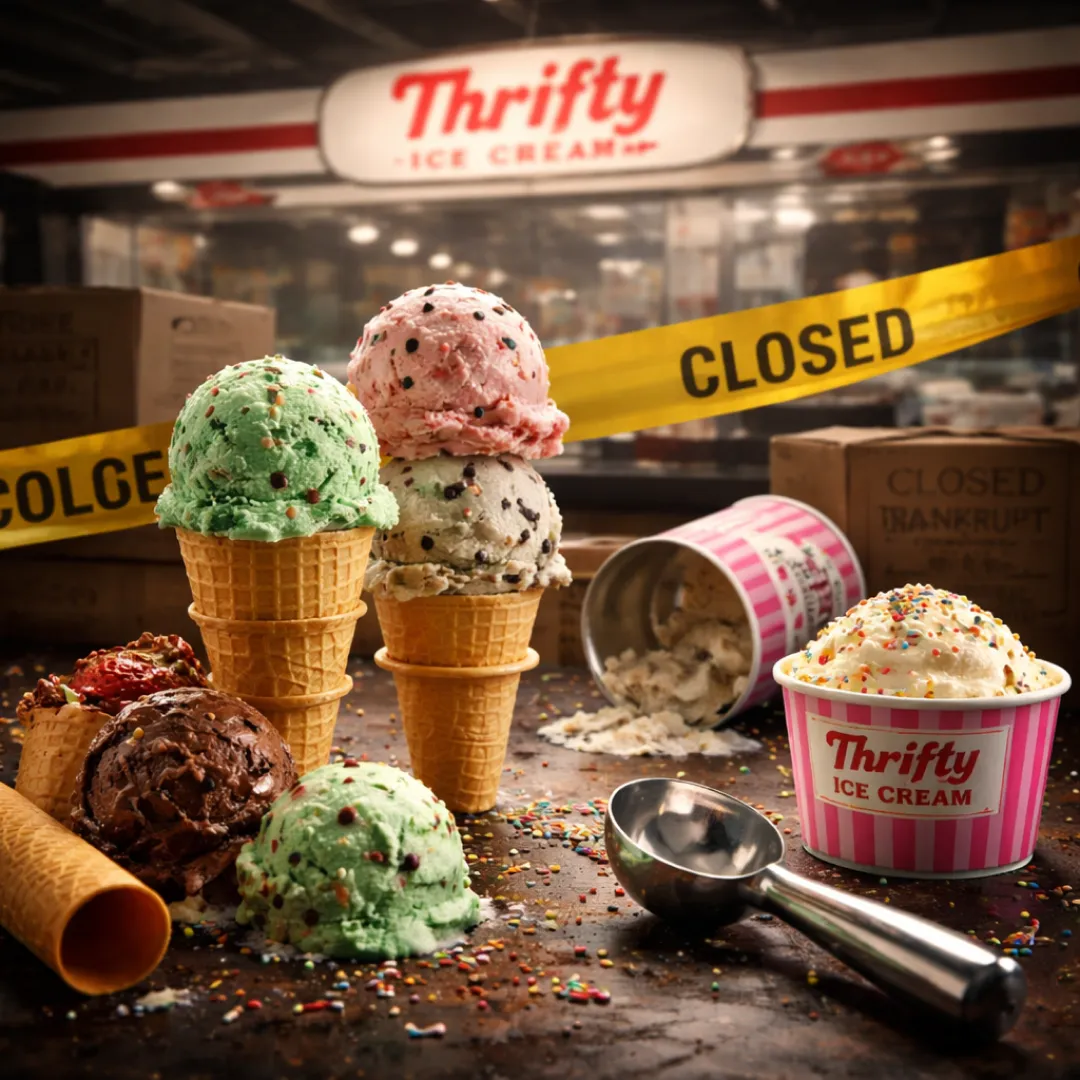
Now the brand's fate hangs on a bankruptcy auction. A potential buyer could resurrect Thrifty's El Monte factory and distribution network, or this iconic chain could vanish entirely from the American dessert landscape. The clock is ticking.
- Bankruptcy Forces Ice Cream Chain to Close 500 Locations
- How Thrifty Ice Cream Built an 85-Year Legacy Before Bankruptcy
- Why Rite Aid's Chapter 11 Bankruptcy Destroyed Thrifty Ice Cream
- Thrifty Ice Cream Joins a Wave of Restaurant Bankruptcies in 2025
- Can Thrifty Ice Cream Survive This Retail Bankruptcy?
- Understanding Bankruptcy Protection: How Chapter 11 Differs from Chapter 7
- FAQ: Thrifty Ice Cream Bankruptcy Questions Answered
Thrifty Ice Cream Bankruptcy: Key Facts at a Glance
| Category | Details |
|---|---|
| Brand Name | Thrifty Ice Cream |
| Parent Company | Rite Aid Corporation |
| Founded | 1940 in West Hollywood, California |
| Bankruptcy Type | Chapter 11 (Reorganization) |
| Filing Date | May 5, 2025 (Rite Aid's 2nd bankruptcy) |
| Locations Closing | 500+ Thrifty counters inside Rite Aid stores |
| Factory Location | El Monte, California (since 1976) |
| Total Rite Aid Debt | Approximately $4 billion |
| Current Status | Assets up for auction; future uncertain |
How Thrifty Ice Cream Built an 85-Year Legacy Before Bankruptcy
The Thrifty ice cream story began in 1940 at a small factory in West Hollywood. Angelenos discovered the soda fountain inside the flagship Thrifty Drug Store in downtown Los Angeles and kept coming back for more. The ice cream won awards at the L.A. County Fair year after year. By the 1970s, Thrifty had achieved cult status across the entire West Coast.

Celebrity endorsements amplified the buzz organically. Locals shared Thrifty memories across generations, turning ordinary dessert runs into family rituals. The brand became synonymous with affordable indulgence—a single scoop rarely exceeded $2 even as competitors raised prices repeatedly.
What made this pricing possible? Volume economics and vertical integration. Thrifty controlled production, distribution, and retail through the Rite Aid partnership. Cutting middlemen kept margins healthy despite rock-bottom consumer prices.
The Iconic Cylindrical Scoop That Defined a Brand
What made Thrifty distinctive in a crowded market? That patented cylindrical scoop. Each cone featured a flat-topped, hockey-puck-shaped serving with a decorative frill at the base. No other chain replicated this signature presentation successfully. Customers recognized it instantly.
The El Monte factory, operational since 1976, employed workers who hand-marked each carton with their names—some for three decades straight. This personal touch connected consumers to production in ways corporate ice cream brands couldn't match. Quality control became a point of pride.
Flavor innovation kept customers engaged through changing tastes. The company tested hundreds of new recipes annually, producing unexpected hits like Sriracha Swirl and Bacon & Cheddar alongside classics like Chocolate Malted Crunch. This experimentation sustained relevance even as competitors proliferated.
Why Rite Aid's Chapter 11 bankruptcy Destroyed Thrifty Ice Cream
Rite Aid acquired Thrifty Drug Stores in 1996, inheriting the ice cream brand as part of the deal. For nearly three decades, this arrangement worked remarkably well. Customers filled prescriptions and grabbed a scoop while waiting. The pharmacy traffic subsidized ice cream sales efficiently.
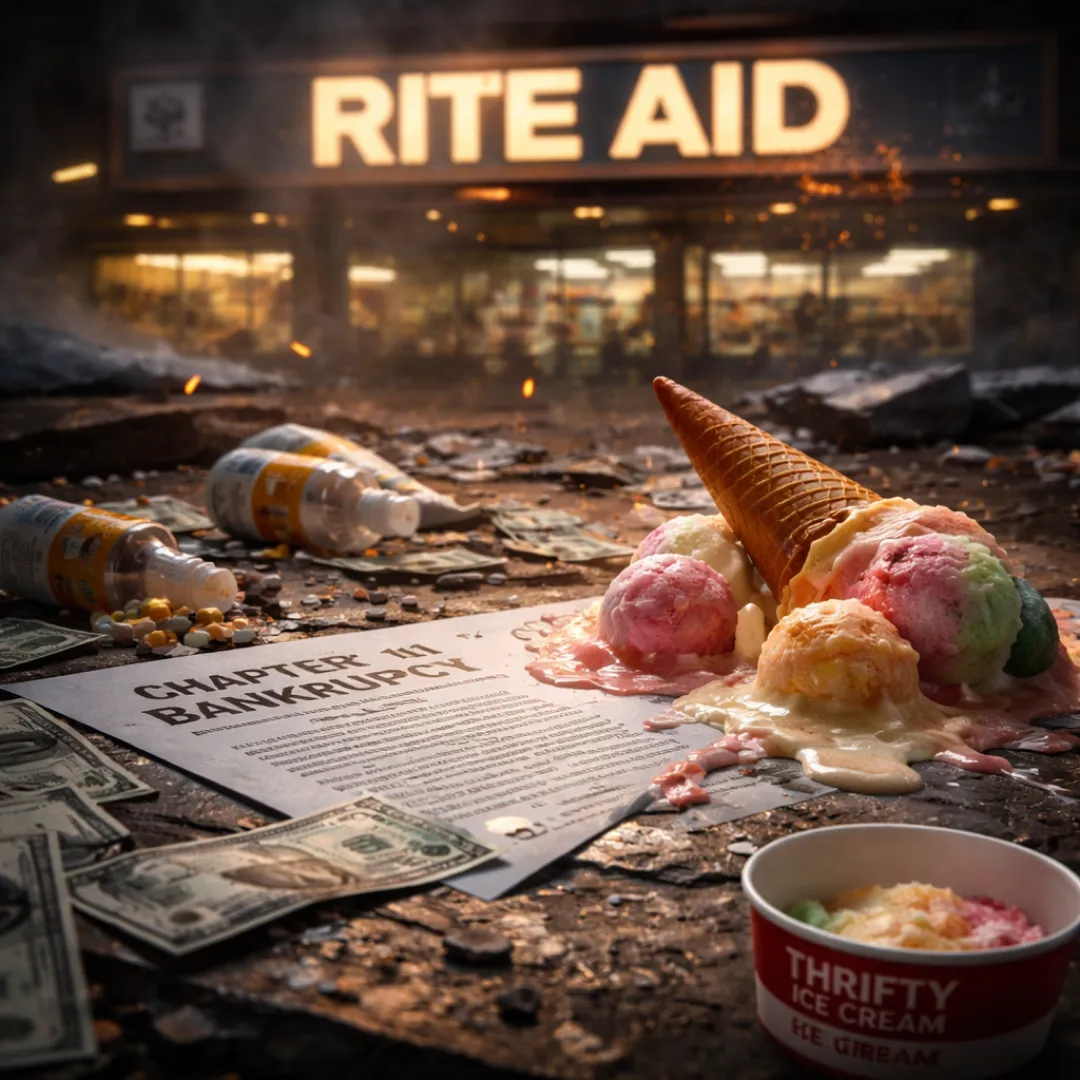
Then Rite Aid collapsed spectacularly. The pharmacy giant filed its first Chapter 11 bankruptcy in October 2023, citing $3.99 billion in funded debt, opioid lawsuit liabilities exceeding $1 billion, and declining foot traffic from COVID-era shifts to mail-order prescriptions. That filing eliminated $2 billion in debt. It wasn't enough to save the company.
Eight months after emerging from bankruptcy, Rite Aid filed again. The May 2025 Chapter 11 petition acknowledged that reorganization had failed completely. Vendors refused shipments without prepayment. Store shelves sat empty for weeks. High-margin front-end sales evaporated as customers fled to competitors.
The Thrifty counters couldn't be separated from Rite Aid locations during bankruptcy proceedings. Legal entanglements made independent operation impossible. When stores closed, the ice cream counters vanished with them automatically. By October 2025, Rite Aid shuttered all 1,200+ remaining stores, ending 63 years of operation.
Here's what makes this tragedy particularly bitter: Thrifty itself remained profitable. The ice cream division generated positive cash flow throughout Rite Aid's decline. A healthy subsidiary died because its parent couldn't survive.
Thrifty Ice Cream Joins a Wave of Restaurant Bankruptcies in 2025
The Thrifty closure reflects broader turmoil across American food retail. S&P Global reported that July 2025 saw over 70 major corporate bankruptcies—the highest monthly total since the pandemic's peak in 2020. Restaurant chains accounted for a disproportionate share of these filings.

The pattern repeats across segments. Casual dining, fast casual, and QSR chains all reported declining traffic and compressed margins throughout 2024-2025. No category escaped unscathed. The shakeout continues with no clear end in sight.
Hooters, Bar Louie, and Other Restaurant Casualties of 2025
Hooters of America filed Chapter 11 in March 2025, closing roughly 30 locations immediately. Bar Louie declared bankruptcy for the second time in five years, unable to recover from pandemic-era damage. On the Border Mexican Grill shuttered 40 restaurants across multiple states. Italian chains Bravo! and Brio faced their second bankruptcy since 2020. Iron Hill Brewery liquidated entirely under Chapter 7.
So what's driving this carnage across the industry? Pandemic debt remains the primary culprit. Restaurants borrowed heavily to survive closures, expecting pre-2020 consumer spending patterns to return quickly. They haven't. Rising food costs, persistent labor shortages, and fierce competition from delivery apps compound the pressure relentlessly.
McDonald's CFO noted "softer, declining restaurant industry traffic" during 2025 earnings calls. Wendy's announced plans to close approximately 300 locations nationwide. Jack in the Box projected 150-200 closures over the coming fiscal year. Even profitable chains are contracting proactively.
The implications extend beyond individual brands. Commercial real estate suffers as restaurant closures leave strip malls and shopping centers with vacant anchor tenants. Suppliers lose major accounts overnight. The ripple effects cascade through local economies.
Can Thrifty Ice Cream Survive This Retail Bankruptcy?
Rite Aid listed Thrifty Ice Cream and its El Monte factory among assets for auction. A buyer could acquire the brand, manufacturing equipment, and distribution relationships separately from the pharmacy business. This offers a potential lifeline for the beloved brand.
Grocery stores like Vons and Albertsons already stock Thrifty pints and quarts in their freezer sections. Independent franchise locations operate outside Rite Aid's bankruptcy estate entirely. These channels could sustain the brand while new ownership rebuilds retail presence.
Retail analysts remain skeptical about long-term prospects. "Rite Aid is likely to be bought up piecemeal by several competitors," one assessment concluded grimly. The ice cream division may not attract sufficient buyer interest to continue as a standalone operation without pharmacy traffic driving customers.
The auction deadline will determine everything. Without a buyer willing to invest in manufacturing upgrades and marketing campaigns, Thrifty's 85-year run ends permanently. Those square scoops become nostalgia rather than commerce. California loses another piece of its cultural heritage.
Understanding Bankruptcy Protection: How Chapter 11 Differs from Chapter 7
When businesses file bankruptcy, they choose between reorganization and liquidation. Rite Aid selected Chapter 11 twice, attempting to restructure debts while continuing operations. This approach preserves jobs and vendor relationships—at least temporarily during proceedings.
Chapter 7 means immediate closure with no second chances. Iron Hill Brewery took this route in October 2025, owing creditors over $20 million with only $125,000 cash on hand. No reorganization plan. Assets sold to satisfy debts in whatever order maximizes creditor recovery.
For consumers, the distinction matters significantly. Chapter 11 bankruptcy protection lets companies honor gift cards, transfer prescriptions, and maintain service during proceedings. Chapter 7 terminates everything immediately—gift cards become worthless paper overnight.
Employees face different outcomes under each chapter. Chapter 11 often preserves positions during reorganization, though layoffs typically follow as companies rightsize operations. Chapter 7 terminates all employment immediately, with final wages becoming unsecured claims that may never be paid fully.
| Feature | Chapter 7 | Chapter 11 |
|---|---|---|
| Purpose | Liquidation—sell assets to pay debts | Reorganization—restructure while operating |
| Business Operations | Cease immediately | Continue during proceedings |
| Employee Impact | All employees terminated | Jobs may be preserved |
| Asset Sale | Forced liquidation sale | Strategic sales to maximize value |
| Creditor Recovery | Often minimal (cents on the dollar) | Potentially higher through reorganization |
| Timeline | 3-6 months typically | Months to years |
| Examples (2025) | Iron Hill Brewery | Rite Aid, Hooters, Bar Louie |
FAQ: Thrifty Ice Cream Bankruptcy Questions Answered
Where can I still buy Thrifty Ice Cream products?
Thrifty pints and quarts remain available in freezer sections at select grocery stores
including Vons and Albertsons, plus a handful of independent franchise locations in
California and Mexico.
How long does bankruptcy typically affect a company's credit?
Chapter 11 bankruptcy can impact corporate credit ratings and borrowing ability for 7-10
years, though successful reorganization may restore creditworthiness sooner depending on
post-bankruptcy performance.
What caused Rite Aid to file bankruptcy twice in two years?
Rite Aid's double filing resulted from opioid lawsuit liabilities exceeding $1 billion,
vendor supply disruptions, declining front-end sales from empty shelves, and competition
from CVS, Walgreens, and online pharmacies.
Can consumers file claims against bankrupt companies?
Yes, consumers with unredeemed gift cards, undelivered orders, or other claims can file
proof of claim forms with the bankruptcy court, though recovery typically represents
only a fraction of the original value.
How many restaurant chains filed for bankruptcy in 2024-2025?
Major 2024-2025 restaurant bankruptcies include Red Lobster, TGI Fridays, Buca di Beppo,
Hooters, Bar Louie, On the Border, Bravo Brio, BurgerFi, Iron Hill Brewery, and multiple
regional chains—representing a 50% increase over 2023 filings.
What happens to employees when a retail chain declares bankruptcy?
Under Chapter 11, employees may continue working during reorganization, though layoffs
often follow; under Chapter 7 liquidation, all positions terminate immediately with
final wages becoming unsecured claims in bankruptcy proceedings.
Updated 2025-12-22
Updated 2025-01-07