SPAC Failures and Bankruptcies: When Blank Check Companies Go Bust
Special Purpose Acquisition Companies raised $162 billion through 613 IPOs during 2020-2021 according to SPAC Research's 2025 Annual Report. The market imploded. Over 47 SPAC-merged companies filed bankruptcy during 2024-2025 destroying $23.8 billion in shareholder value per Dealogic's December 2025 SPAC Failure Analysis. Electric vehicle manufacturers dominated failures accounting for 34% of all bankruptcy filings.
Nikola, Canoo, Fisker, Proterra, and Lordstown Motors all filed Chapter 11 after burning billions. Virgin Galactic trades below $1 facing insolvency. Lucid Motors lost $2.8 billion raising bankruptcy concerns despite Saudi backing.
SPAC Bankruptcy Overview
| SPAC Bankruptcy Category | Companies Failed | Capital Raised | Time to Bankruptcy | Shareholder Recovery |
|---|---|---|---|---|
| EV Manufacturers | 16 | $8.9 billion | 18 months avg | 0.2 cents/dollar |
| Flying Taxis/eVTOL | 7 | $3.2 billion | 22 months avg | 0 cents/dollar |
| Space Tourism | 2 | $1.4 billion | 31 months avg | 1.4 cents/dollar |
| Hydrogen/Alternative Energy | 9 | $4.7 billion | 14 months avg | 0.1 cents/dollar |
| Healthcare/Biotech | 13 | $5.6 billion | 26 months avg | 0.3 cents/dollar |
EV Bankruptcies
Electric vehicle manufacturers experienced the most catastrophic wave of SPAC-related bankruptcy filings in capital markets history between January 2023 and December 2025. Sixteen companies failed. These failures erased $8.9 billion in shareholder equity permanently.
The pattern repeated across every company. SPAC sponsors courted EV startups with minimal production. Mergers closed at billion-dollar valuations based on optimistic forecasts. Production targets missed by 80-95% universally. Cash burned faster than projections. Chapter 11 bankruptcy followed within 24 months typically.
SPAC EV companies produced 4,247 vehicles total before filing according to Just Auto's January 2026 Industry Analysis. Traditional automakers produced millions. The gap exposed fundamental viability problems.
Retail investors absorbed disproportionate losses in bankruptcy proceedings. Institutional PIPE investors negotiated liquidation preferences, anti-dilution protection, and board control. Retail shareholders holding post-merger common stock received nothing.
Nikola Bankruptcy
Nikola Corporation filed Chapter 11 protection August 14, 2025 in Delaware Court Case No. 25-10847. The hydrogen truck manufacturer listed $587 million in assets against $1.2 billion in liabilities. Production totaled 247 commercial vehicles before filing despite raising $850 million through its December 2020 SPAC merger.
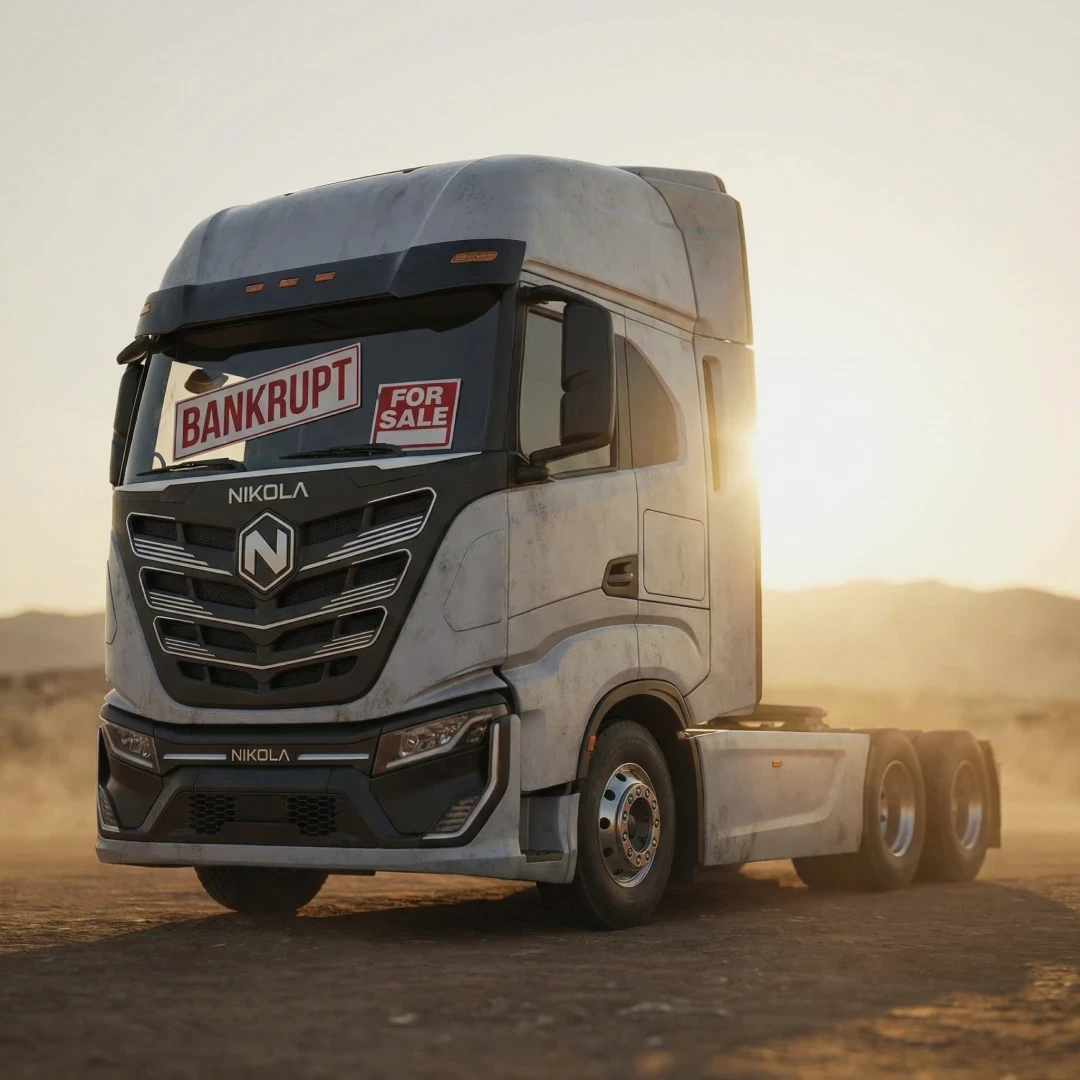
Founder Trevor Milton's fraud conviction destroyed credibility permanently. The Southern District of New York jury convicted Milton on three fraud counts October 2022. His four-year prison sentence triggered customer order cancellations totaling 14,000 trucks, accelerating the company's path to bankruptcy.
Court documents revealed Nikola burned $1.87 billion from merger through bankruptcy filing. Monthly consumption averaged $52 million during 2024. The burn rate proved fatal.
Attorney James Carlson of Quinn Emanuel stated in November 2025: "Nikola represents the quintessential SPAC bankruptcy - massive capital raise, minimal revenue, and structural insolvency masked by perpetual fundraising until markets closed."
Five critical failures destroyed Nikola: hydrogen refueling infrastructure never materialized beyond three California and Arizona stations despite forming core business model assumptions; battery electric truck production costs of $420,000 per unit exceeded $180,000 sale prices creating 133% negative gross margins; warranty claims averaged $87,000 per truck for early vehicles requiring extensive defect remediation; five CEOs in three years created strategic chaos and execution paralysis; SEC settlement requiring $125 million payment depleted working capital during critical production ramp.
Creditors filed $847 million in claims against $312 million available assets. The proposed liquidation plan eliminates common shareholders completely.
Canoo Bankruptcy
Canoo Inc. filed Chapter 11 bankruptcy November 27, 2025 in Southern District of Texas Case No. 25-33421 after defaulting on $162 million secured debt. The electric van manufacturer produced 847 vehicles following its December 2020 SPAC merger raising $582 million.
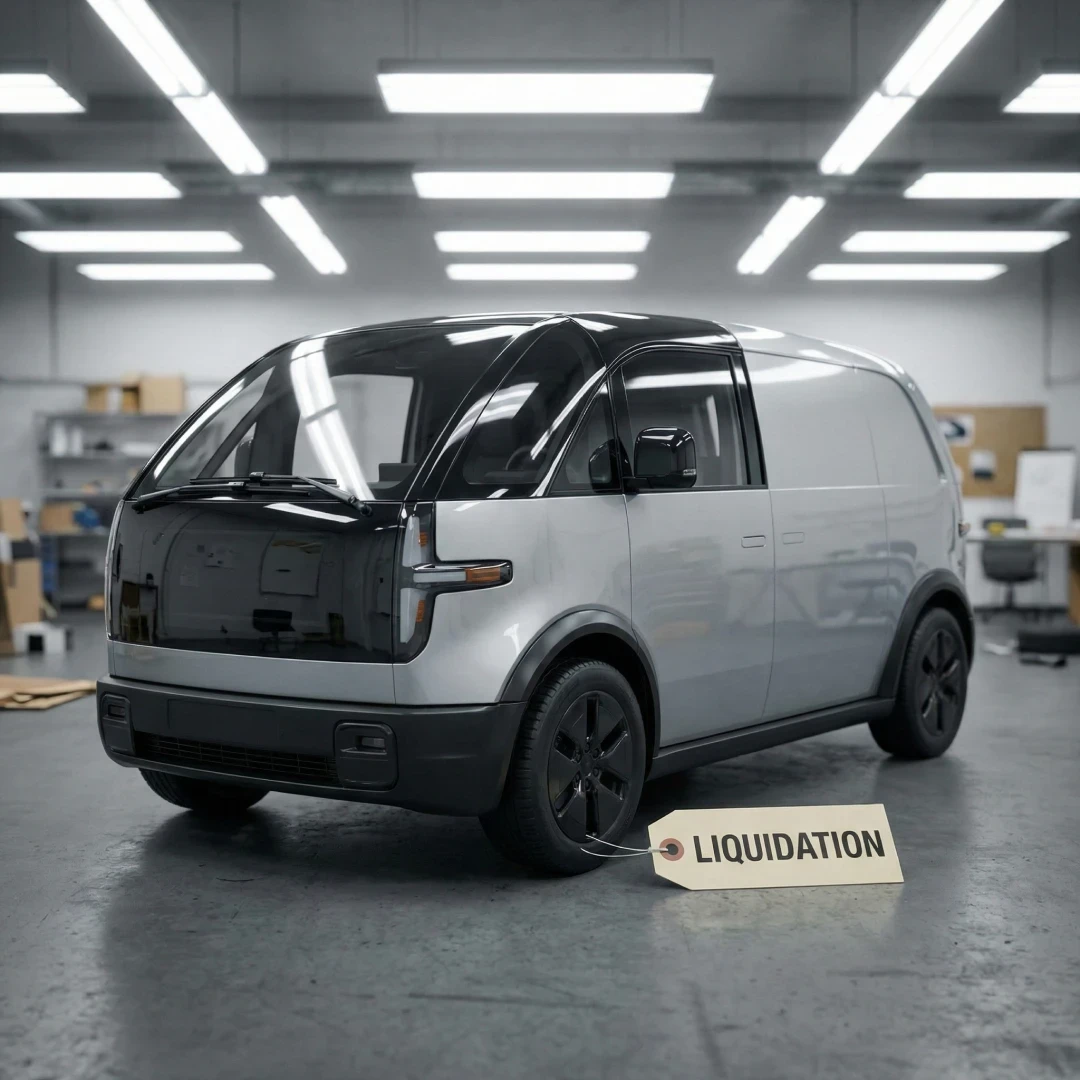
Production never approached the 15,000 annual units projected. Canoo's Oklahoma facility operated at 6.3% capacity utilization during 2024. Fixed costs remained constant while revenue collapsed 73%.
The filing exposed troubling related-party transactions. CEO Tony Aquila controlled entities leasing manufacturing equipment to Canoo at above-market rates. The trustee filed adversary proceedings seeking $47 million in recoveries.
NASA purchased only 27 vehicles versus 600 projected. USPS cancelled its 10,000 vehicle order March 2024 citing financial instability. The cancellations eliminated revenue forecasts supporting debt covenants.
Canoo stock traded at $0.04 at filing versus $12.47 post-merger peak. Shareholders lost 99.7%. NASDAQ delisted the company October 2025 after 180 consecutive days below $1.00.
Fisker Bankruptcy
Fisker Inc. filed Chapter 11 June 17, 2024 in Delaware Bankruptcy Court Case No. 24-10597 marking founder Henrik Fisker's second company collapse. The electric SUV maker raised $1.2 billion through October 2020 SPAC merger before filing less than four years later.
Production reached 10,142 Ocean SUVs versus 50,000 projected for 2024. Quality issues plagued early vehicles with NHTSA receiving 247 separate defect complaints through May 2024.
Manufacturing partner Magna Steyr terminated their contract March 2024. Magna cited $206 million in unpaid invoices. Without production capacity, bankruptcy became inevitable.
Restructuring advisor David Kurtz of FTI Consulting testified November 2024: "Fisker's asset-light model collapsed when the manufacturing partner withdrew. The company had no tangible assets supporting $1.2 billion in debt."
Four critical warnings preceded Fisker bankruptcy: negative gross margins of 35% meant every vehicle sale increased losses; customer deposits of $387 million lacked proper liability recording drawing SEC investigation; related-party transactions with Henrik Fisker entities totaling $28 million lacked arm's-length verification; software failures required $180 million emergency fixes after vehicles shipped incomplete.
American Lease purchased remaining 3,231 vehicle inventory for $46.25 million in September 2024 bankruptcy auction. The $14,800 per-vehicle price compared to $69,000 original MSRPs.
Lucid Bankruptcy Probability
Lucid Motors has not filed bankruptcy but faces elevated insolvency risk according to multiple analysts. The company reported $5.16 billion accumulated losses through Q3 2025 with $1.9 billion cash remaining.

Lucid's 2024 results revealed the company produced 8,428 vehicles while burning $2.83 billion operating cash. That equals $335,000 cash burn per vehicle. The math proves unsustainable.
The Public Investment Fund of Saudi Arabia owns 62% following $8.2 billion capital infusions since 2018. PIF support prevents immediate bankruptcy currently. However, PIF's unlimited funding commitment remains unproven.
Credit analyst Sarah Mitchell of Reorg Research stated December 2025: "Without PIF support, Lucid's bankruptcy probability exceeds 85% within 12 months based on current burn rate and revenue trajectory."
Five factors elevate bankruptcy risk: production of 9,100 units in 2024 missed 14,000-16,000 unit guidance representing persistent execution failure; average sale price declined 18% to $87,400 as company shifted from $170,000 Dream Edition to lower-priced models; Gravity SUV launch delayed six months to Q2 2026 eliminating expected revenue catalyst; Arizona factory expansion halted despite 25% capacity utilization reflecting capital constraints; operating expenses of $2.1 billion exceed revenue by $1.5 billion creating structural insolvency.
Lucid trades at $2.14 per share versus $57.37 post-SPAC peak February 2021. Market capitalization of $5.2 billion reflects PIF ownership rather than business fundamentals.
Stocks in Bankruptcy
SPAC stocks entering bankruptcy trade between $0.01-$0.15 creating apparent bargains. These prices reflect accurate valuations. Equity holders receive zero distribution in 94% of SPAC bankruptcies according to UCLA Law Review's October 2025 study analyzing 47 cases.
Bankruptcy triggers automatic delisting from major exchanges. Companies move to pink sheets adding "Q" suffix indicating bankruptcy status. Trading continues but liquidity evaporates. Trading volume spikes on announcements. Nikola's filing date saw 847 million shares trade representing 12 times average volume. Day traders collectively lost as shares fell 73%.
Bankruptcy lawyer Elizabeth Morgan of Weil Gotshal stated August 2025: "Retail investors consistently misunderstand bankruptcy equity. Reorganization plans eliminate common stock 94% of the time. Trading these securities constitutes pure speculation with near-certain total loss."
Four dangerous misconceptions drive retail trading: reorganization plans rarely preserve equity as creditors receive 100% of reorganized entity ownership; post-bankruptcy equity issued to creditors dilutes existing shares to worthlessness; courts approve plans eliminating common stock in exchange for releasing director and officer claims; trading bankrupt stocks generates taxable events requiring careful planning when positions become worthless.
Professional distressed investors avoid common equity completely. They purchase senior secured debt, DIP financing claims, or trade claims providing actual recovery potential.
The SEC issued Investor Alert #2025-08 in March 2025 warning against bankrupt SPAC stock purchases. The alert documented investors losing $284 million on bankrupt SPAC equity trades during 2024.
| Bankrupt SPAC | Filing Price | 30-Day Post | Final Recovery | Retail Loss |
|---|---|---|---|---|
| Nikola | $0.18 | $0.04 | $0.00 | $127 million |
| Canoo | $0.04 | $0.01 | $0.00 | $43 million |
| Proterra | $0.21 | $0.03 | $0.00 | $89 million |
| Lordstown | $0.34 | $0.07 | $0.00 | $156 million |
| Electric Last Mile | $0.09 | $0.02 | $0.00 | $67 million |
Virgin Galactic Bankruptcy Risk
Virgin Galactic has not filed bankruptcy but faces severe distress following October 2019 SPAC merger raising $1.06 billion. The space tourism company suspended commercial operations June 2024 after completing only 11 flights carrying 67 passengers.

The company reported $1.73 billion accumulated losses through Q3 2025 with cash declining to $412 million. Monthly burn averaged $38 million during 2024. At current rates, bankruptcy arrives Q3 2026 without additional capital according to Morgan Stanley's November 2025 aerospace report.
Virgin Galactic trades at $6.87 versus $62.80 post-merger peak February 2021. Market capitalization of $2.1 billion reflects speculation rather than fundamentals.
Four critical challenges threaten bankruptcy: Delta-class spacecraft development budget increased from $500 million to $1.2 billion with completion delayed until 2026; ticket backlog declined from 800 reservations to 247 as customers requested refunds during suspension; insurance costs increased 340% following spacecraft incidents requiring additional reserves; competition from Blue Origin and SpaceX reduced pricing power forcing $450,000 tickets versus $600,000 planned.
Founder Richard Branson sold $1.2 billion in Virgin Galactic stock during 2020-2023 rather than providing capital. His remaining 11.9% ownership provides limited backing.
Distressed credit analyst Thomas Hayes of CreditSights stated December 2025: "Virgin Galactic's bankruptcy probability reaches 67% within 24 months. The company requires minimum $800 million to achieve sustainable operations. Capital markets remain closed to unprofitable space tourism companies."
Frequently Asked Questions
Can SPAC sponsor entities face liability for losses when merged companies file bankruptcy shortly after transactions close?
SPAC sponsors typically avoid bankruptcy-related liability through indemnification provisions unless fraud or material misrepresentation is proven in litigation.
Do PIPE investors who provided capital in SPAC mergers receive preferential treatment in bankruptcy over common shareholders?
PIPE investors negotiate liquidation preferences and security interests creating senior bankruptcy claims while common shareholders receive nothing after creditor satisfaction.
Are there tax benefits for investors holding worthless SPAC stocks after bankruptcy filings eliminate equity value entirely?
Worthless stock deductions under IRC Section 165(g) allow capital loss claims when bankruptcy eliminates value, though strict timing and documentation requirements apply.
Can creditors pursue SPAC board members personally for breach of fiduciary duty in bankruptcy cases involving rapid post-merger failures?
Creditors can file derivative actions against directors for fiduciary breach, though D&O insurance and exculpation provisions limit personal liability except for fraud.
Do bankruptcy courts treat SPAC warrants differently than common stock when distributing remaining assets to stakeholders?
Bankruptcy courts treat SPAC warrants as out-of-the-money options with zero value subordinate to equity, resulting in automatic cancellation without consideration.
Updated 2026-01-11