What Happens If You File for Bankruptcy: Complete Guide to Process, Assets, and Recovery
Filing for debt relief triggers a cascade of legal, financial, and personal consequences that reshape your relationship with money for years. What happens when you file for bankruptcy depends on which chapter you choose, what assets you own, and how much debt you carry into the process.
The question "what happens if I file for bankruptcy" keeps millions of Americans awake at night. Will you lose your house? Your car? Can creditors still pursue you? The answers are more nuanced—and often more favorable—than most people expect.
This guide walks through the filing process step by step, explaining consequences for your property, credit, and future financial options. Knowledge replaces fear when you understand exactly what happens when you declare bankruptcy.
What Happens When You File: Timeline Overview
| Timeline | What Happens |
|---|---|
| Day 1 (Filing) | Automatic stay activates; all collection stops immediately |
| Days 1-30 | Trustee assigned; creditors notified of filing |
| Days 21-40 | 341 Meeting of Creditors (15-minute hearing) |
| Days 60-90 | Deadline for creditor objections passes |
| Months 3-4 (Ch. 7) | Discharge granted; qualifying debts eliminated |
| Years 3-5 (Ch. 13) | Repayment plan completes; remaining debts discharged |
| Years 7-10 | Filing removed from credit report |
What Happens When You File: The Immediate Effects
The moment your petition reaches the court clerk, federal law creates an invisible shield around you. This is the automatic stay—and it changes everything instantly. Collection calls stop. Lawsuits freeze. Foreclosure halts. Wage garnishment ends.

What happens when you declare bankruptcy to your daily life? Creditors receive legal notice that contacting you violates federal law. Your mailbox stops filling with threatening letters. The phone stops ringing at dinner. Stress levels drop measurably within the first week.
Can filing stop foreclosure? Absolutely. The automatic stay halts foreclosure sales immediately upon filing, giving you time to negotiate with lenders or complete a Chapter 13 repayment plan that cures mortgage arrears over years rather than demanding immediate payment.
Will this process stop wage garnishment? Yes—the garnishment order becomes unenforceable the instant you file. Your employer receives notice and must resume paying your full wages. Money already garnished before filing typically cannot be recovered, but future paychecks remain intact throughout proceedings.
The Automatic Stay: Your Immediate Protection
Protection through the automatic stay represents the most powerful debtor remedy in American law. Creditors who violate this stay face sanctions, attorney fee awards, and potential damages. Courts take violations seriously.
What happens if you file while facing a lawsuit? The case freezes mid-proceeding. Trials stop. Discovery halts. Judgment collection efforts cease even if the creditor already won. This breathing room lets you address debts systematically rather than fighting fires constantly.
The stay duration depends on your filing history. First-time filers receive protection throughout the entire case. Repeat filers face limitations—a second filing within one year provides only 30 days of protection unless the court extends it.
What Happens to Your House and Car If You File
"Will I lose my house if I file bankruptcy?" This question haunts every homeowner considering debt relief. The answer depends on your equity, your state's exemption laws, and whether you're current on mortgage payments. Most filers keep their homes.
Can you file and keep your house? Yes—if your equity falls within your state's homestead exemption. Texas and Florida protect unlimited home equity. Other states cap protection between $25,000 and $600,000. Equity beyond exemption limits may be seized to pay creditors.
If you file what happens to your car follows similar logic. Can you file and keep your car? State exemptions typically protect $3,000 to $15,000 in vehicle equity. Owe more than the car's value? There's no equity to protect—and no risk of losing the vehicle.
Do you lose your home if you file when behind on payments? Chapter 13 offers a solution. You can cure mortgage arrears through a repayment plan while making ongoing payments directly to the lender. Many homeowners file specifically to save their properties from foreclosure.
How to File and Keep Your House
Keeping your house through this process requires understanding exemptions and choosing the right chapter. If I file what happens to my house depends primarily on whether I'm current on payments and how much equity I've built.

Current on mortgage and equity within exemption limits? Chapter 7 lets you keep the home while discharging other debts. Behind on payments? Chapter 13 lets you catch up over three to five years while maintaining residence. The mortgage remains—only unsecured debts disappear.
How to file and keep your car works identically. If I file what happens to my car depends on equity and payment status. Continue making car payments during and after proceedings, and the vehicle stays yours regardless of other debts being discharged.
What Debts Get Cleared vs. What Survives
| Debts Eliminated (Dischargeable) | Debts That Survive (Non-Dischargeable) |
|---|---|
| Credit card balances | Child support & alimony |
| Medical bills & hospital debt | Student loans (most cases) |
| Personal loans & payday loans | Recent tax debts (under 3 years) |
| Utility bills & past-due rent | Criminal fines & restitution |
| Old income tax debts (3+ years) | Debts from fraud or willful injury |
| Collection accounts & judgments | Government-backed loans (some) |
What Happens to Your Debt When You Declare
Does filing clear debt? Yes—but not all debt. The discharge eliminates your legal obligation to repay qualifying unsecured debts. Credit cards, medical bills, personal loans, and most older tax debts vanish permanently. Creditors cannot pursue collection ever again.
Does the process clear all debt? No. Certain obligations survive regardless of chapter filed. Child support and alimony persist. Student loans remain except in rare hardship cases. Recent tax debts continue. Criminal fines and restitution stay collectible. Debts obtained through fraud receive no protection.
Does filing clear medical debt? Absolutely. Medical bills, hospital charges, and collection accounts derived from healthcare services get eliminated completely. Studies indicate that 66% of all filings involve medical debt as a contributing factor. Relief is complete and permanent.
Can you file on credit cards? Credit card debt receives discharge in virtually every case. Filing for credit card debt eliminates balances regardless of amount owed. Whether you owe $5,000 or $500,000, the process wipes the slate clean.
Debts That Survive: What Doesn't Get Cleared
Does filing clear student loans? Rarely. The "undue hardship" standard requires proving you cannot maintain minimal living standards while repaying, that circumstances will persist, and that you've made good-faith repayment efforts. Courts interpret this narrowly—fewer than 0.1% of filers successfully discharge student loans.
Can you file on IRS debt? Sometimes. Does the process clear tax debt? Income taxes become dischargeable if the return was due over three years ago, filed over two years ago, and assessed over 240 days ago. Payroll taxes and fraud penalties never qualify regardless of age.
Ready for an uncomfortable truth about student loan discharge? The system treats education debt differently than every other unsecured obligation. Discharging these loans requires separate litigation within your case—a costly adversary proceeding most filers cannot afford.
How Long Does Filing Stay on Your Credit Report
How long does this affect your credit? The filing appears on credit reports for seven to ten years depending on chapter. Chapter 7 filings remain for ten years from the filing date. Chapter 13 cases drop off after seven years. Both initially devastate credit scores.
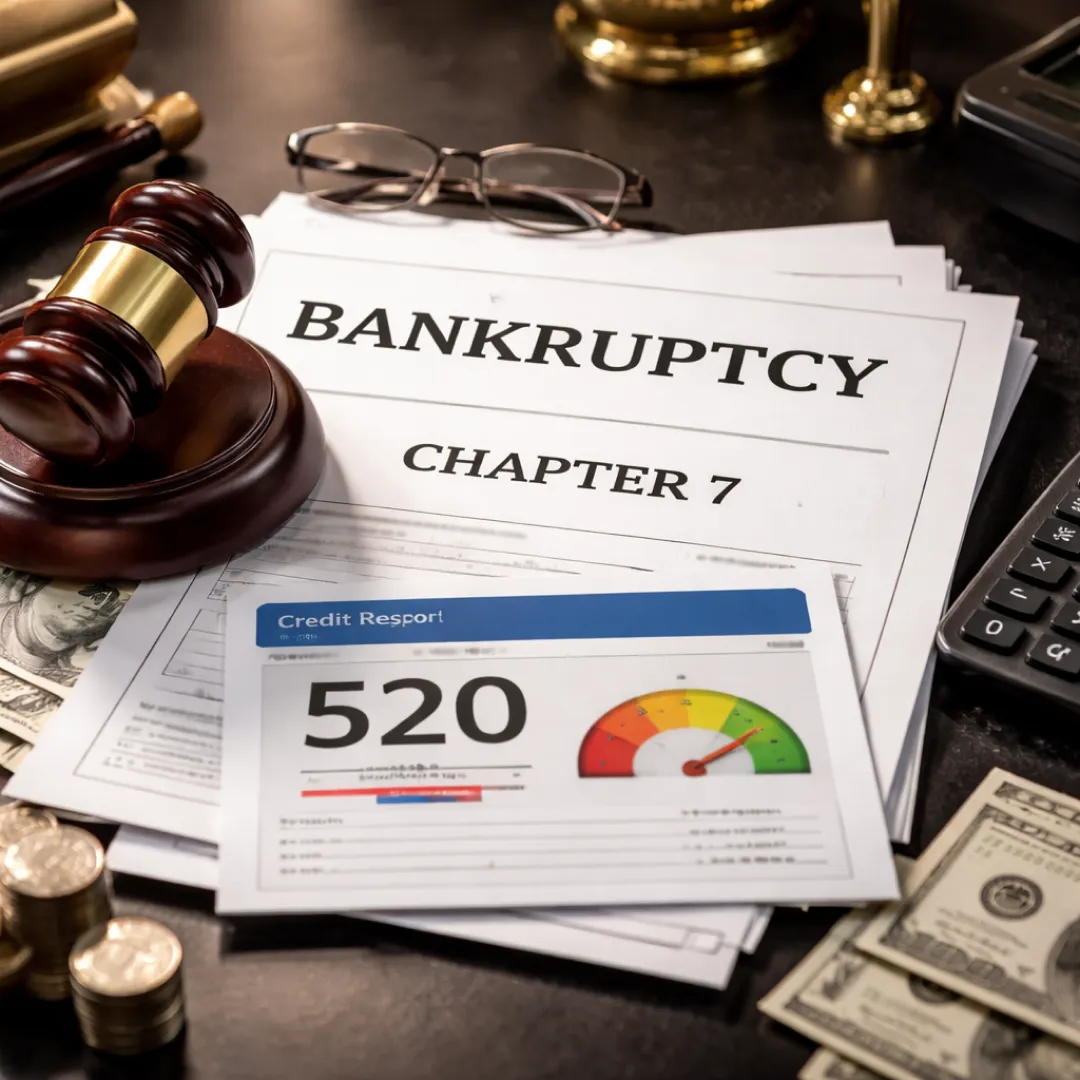
How does filing affect your credit in practical terms? Expect scores to drop 100-200 points immediately following discharge. The impact diminishes over time as positive payment history accumulates on new accounts. Most filers see meaningful score recovery within 18-24 months of discharge.
How does filing for debt relief affect you beyond credit scores? Landlords may hesitate to rent to recent filers. Some employers check credit for positions involving financial responsibility. Insurance rates may increase in states permitting credit-based pricing. These consequences fade as the filing ages.
Can you remove the filing from your credit report early? Legitimate early removal requires proving the information was reported inaccurately. If you actually filed, the notation stays until the reporting period expires. Companies claiming otherwise are likely scams.
Life After Filing: Rebuilding Credit and Financial Recovery
What happens after you file and receive discharge? Life continues—often better than before. The debt burden lifts. Monthly cash flow improves dramatically. Stress decreases measurably. The rebuilding process begins immediately.
Credit cards after discharge become available sooner than most expect. Secured cards requiring deposits are typically accessible within weeks. Unsecured offers follow within 12-24 months. Interest rates run higher initially but normalize as credit improves.
Loans after discharge require patience but remain achievable. Vehicle financing typically becomes available within one to two years post-discharge. Specialized lenders work with this market—expect higher interest rates but available financing.
Can you buy a house after filing? Yes. FHA home loans require waiting two years from Chapter 7 discharge or one year into Chapter 13 repayment with court approval. Conventional mortgages typically require four years. The path exists for determined buyers.
How to Rebuild Credit After Filing Successfully
Rebuilding credit after discharge follows predictable patterns. Secured credit cards establish new positive history. Credit-builder loans from credit unions diversify account types. Becoming an authorized user on a family member's seasoned account helps immediately. On-time payments matter most.
How long after discharge can you buy a car? Most filers qualify for auto financing within six months to one year post-discharge. Subprime lenders specialize in post-discharge auto loans. Rates decrease as scores improve over time.
Life after Chapter 7 looks different than most expect. The discharge eliminates debt. Credit rebuilds steadily. Within two to three years, many filers qualify for major purchases. The filing becomes a historical notation rather than an active barrier.
Debt consolidation vs filing comparisons often favor filing for severely distressed debtors. Consolidation merely restructures existing obligations while discharge eliminates them. When debts exceed manageable levels, elimination beats reorganization every time.
Recovery Timeline: What to Expect After Filing
| Financial Goal | After Chapter 7 | After Chapter 13 |
|---|---|---|
| Secured Credit Card | Immediately after discharge | During plan with court approval |
| Unsecured Credit Card | 12-24 months post-discharge | Upon plan completion |
| Auto Loan | 6-12 months (subprime rates) | With court approval during plan |
| FHA Mortgage | 2 years post-discharge | 1 year into plan with approval |
| Conventional Mortgage | 4 years post-discharge | 2 years after plan completion |
| Credit Score 700+ | 2-4 years with active rebuilding | 1-2 years post-completion |
| Credit Report Clear | 10 years from filing date | 7 years from filing date |
Updated 2025-01-07
FAQ
Can I file without my spouse knowing or participating?
Yes, one spouse can file individually without the other spouse filing, though the
non-filing spouse's income may still be considered for means test calculations.
Does filing affect my spouse if only I file?
Filing only discharges the filing spouse's liability—if both spouses signed for a joint
debt, creditors can still pursue the non-filing spouse for the full amount.
How much debt do you need to file?
No minimum debt amount exists—you can file for any amount of debt, though the costs and
consequences may not justify filing for small debts under $10,000.
What happens when a company files to its employees and contractors?
In company filings, employees and contractors become unsecured creditors whose unpaid
wages and invoices are paid after secured creditors but before shareholders.
How to avoid filing when facing overwhelming debt?
Alternatives include debt settlement (negotiating reduced payoffs), debt management
plans through credit counseling, and hardship programs offered directly by creditors.
Can home buyers during active Chapter 13 qualify for mortgage financing?
Buyers in active Chapter 13 can qualify for FHA loans after one year of on-time plan
payments with court approval and lender willingness to work with the situation.